$20 Billion Shock: They’re Putting the World Cup Up for Sale
Here’s the core of it. FIFA wants to create a brand-new subsidiary called FIFA Forward Enterprise, or FFE for short. This company would take over all the commercial and event operations for the men’s and women’s World Cups, the Club World Cup, and a bunch of other FIFA tournaments. Think broadcasting deals, sponsorships, ticketing, licensing—the money-making machinery that turns the World Cup into a global cash machine. FIFA values this new company at around $20 billion. To unlock some of that value, it plans to sell minority stakes of up to 20 percent to private investors. That could raise as much as $4.2 billion.
Private Money In, Football’s Soul at Risk?
The investors wouldn’t run the show. FIFA insists it would keep majority control of the board and total authority over the sporting side—the rules, the calendar, who hosts what, the competitions themselves. The private money, led in talks by a firm connected to Joshua Kushner (brother of Jared Kushner), would be minority, non-controlling interests chosen for the long haul. All the net profits from FFE, FIFA says, would flow back into the game.
Billions for Grassroots… or a Massive Power Grab?
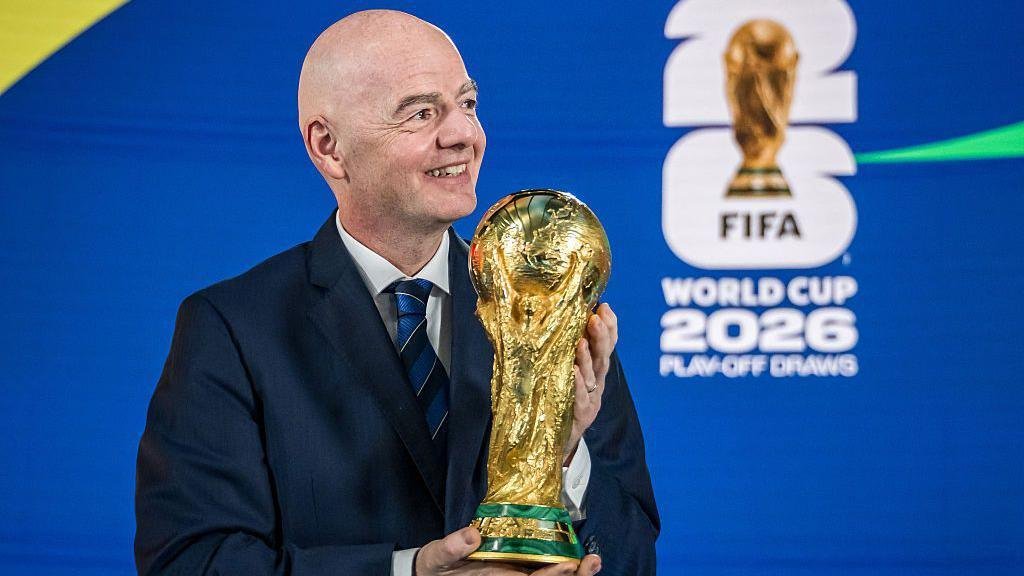
Why do this? Infantino frames it as the natural next step. The 2026 World Cup in the United States, Canada, and Mexico smashed revenue records—somewhere north of $13–15 billion for the cycle. FIFA’s already a non-profit that redistributes cash to its 211 member associations for development. But Infantino wants more. Under the plan, every association could get an immediate $20 million boost for special projects if they sign on, plus increased regular funding: $20 million per association for 2027–2030 (up from the current $8 million), then $22 million and $24 million in the following cycles. Overall, it could mean more than $10 billion extra pumped into grassroots football around the world.
Infantino’s Careful Words Hide a Stunning Personal Payday
Infantino has been careful with his words. In a video statement, he called it “a proposal… not an obligation.” It’s the start of a consultation, he says, a democratic process that needs approval from the majority of member associations and the FIFA Council. “FIFA obviously continues to govern football without any external interference,” he stressed. The World Cup would “always remain.” Some reports even suggest he could end up chairing the new commercial company himself, potentially pocketing a serious personal payday, though that’s still speculative.
Europe Explodes: “They’re Selling the Soul of Football!”
Not everyone’s buying the sunny pitch. UEFA, the powerful European body, came out swinging almost immediately. They accused FIFA of “selling the soul of football” and “crossing a line” that no governing body should ever cross. The World Cup, they argue, isn’t FIFA’s private property to slice up and sell to the highest bidder. CONCACAF and the Asian Football Confederation have rejected the idea too. There’s talk of European nations exploring a boycott of future World Cups if the plan goes ahead. One FIFA advisor even resigned in protest. British Prime Minister Andy Burnham called it a sell-out, saying the World Cup belongs to the people, not private investors.
Fans Beware: Higher Prices, More Tournaments, Richer Hosts Only
The fears are real and practical. Critics worry that once investors have skin in the game, they’ll push for decisions that maximize returns—more frequent tournaments, bigger fields of teams, host cities in the richest markets, higher ticket prices, maybe even direct-to-consumer streaming that cuts out traditional broadcasters. Smaller nations might love the extra development cash. Bigger ones, and a lot of fans, see a slippery slope toward turning the world’s most beloved sporting event into just another asset on a balance sheet.
The Clock Is Ticking — and Football May Never Be the Same
Right now, the clock is ticking. FIFA has given its members a window—roughly until mid-September—to respond. Approval needs a simple majority. Whether that happens, or whether the backlash forces a climbdown, is still anyone’s guess. What’s clear is that Infantino has opened a door that can’t easily be closed. For better or worse, the conversation about who really owns the World Cup has started, and football will never look at its flagship tournament quite the same way again.

Interesting